
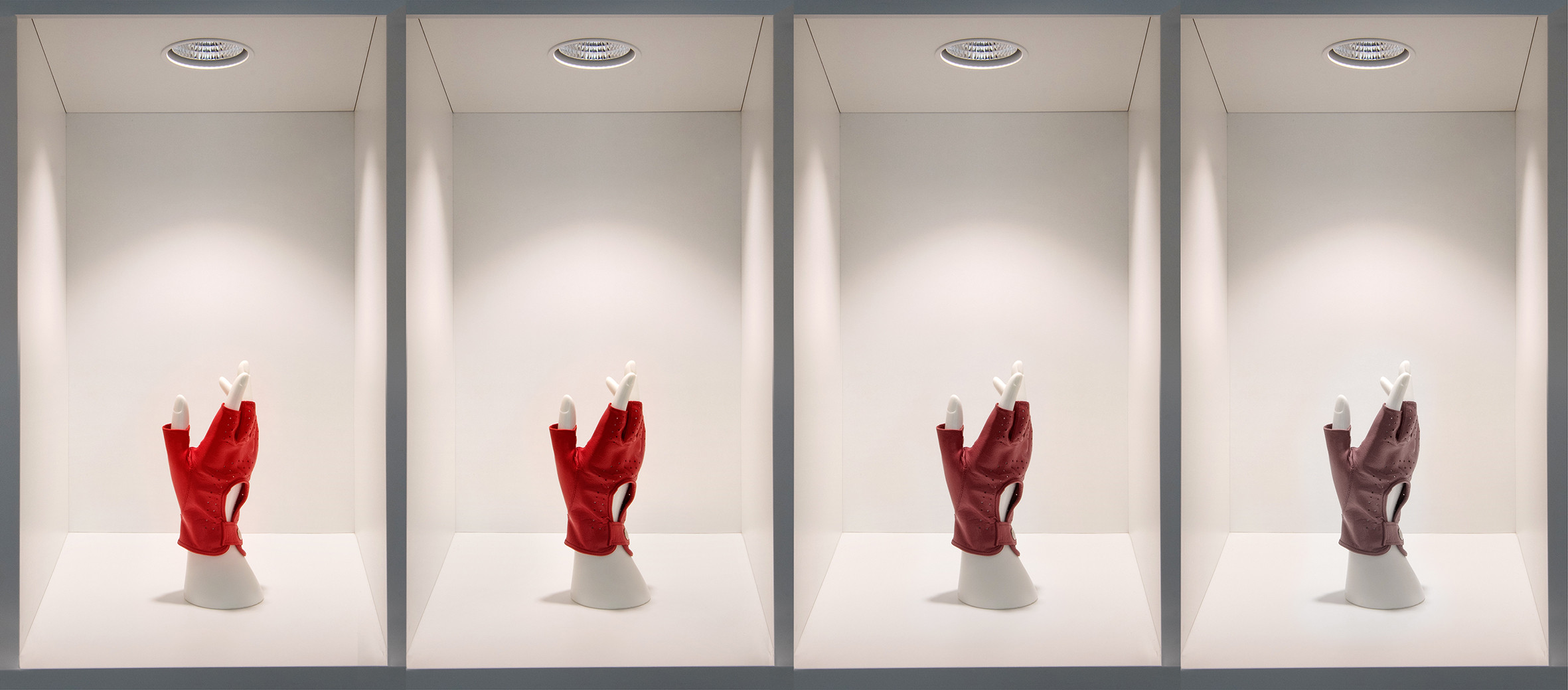
When choosing lighting, people often focus on design, light color, and light output. However, there is another factor that has a major impact on the appearance of a space: the CRI value, or Color Rendering Index. This technical characteristic determines how accurately colors are reproduced under artificial light.
Whether it’s a home, retail store, hospitality venue, or office, a high CRI ensures that materials, colors, and textures are displayed at their very best.
What does CRI mean?
CRI stands for Color Rendering Index and measures how accurately a light source reproduces colors compared to natural daylight.
The scale ranges from 0 to 100:
CRI 100 is equivalent to natural daylight.
The higher the CRI value, the more accurately colors are rendered.
A low CRI can make colors appear dull, flat, or unnatural.
This difference is often more noticeable than you might expect. Wood, natural stone, fabrics, and skin tones can lose much of their natural appearance when illuminated by lower-quality lighting.
Why choose a high CRI?
Lighting not only determines how much you see, but also how you experience a space. With a high CRI:
colors appear more vibrant and natural
materials gain greater depth and character
skin tones look more realistic
food appears more appealing
the atmosphere feels warmer and more luxurious
For interiors that feature high-quality materials such as wood, natural stone, microcement, or textiles, the difference can be significant.
CRI in residential spaces
For residential projects, a CRI of at least 90 is generally recommended. In living areas such as living rooms, kitchens, and bathrooms, it significantly enhances both comfort and ambiance.
Take, for example, a kitchen with a marble countertop or wood veneer cabinetry. Under lighting with a low CRI, many subtle details and color variations are lost. High-quality LED lighting, on the other hand, highlights textures, grain patterns, and natural colors beautifully.
In bathrooms, accurate color rendering is equally important for everyday activities such as shaving or applying makeup.
The importance of CRI in retail and hospitality
For retail stores and hospitality venues, accurate color rendering is even more important.
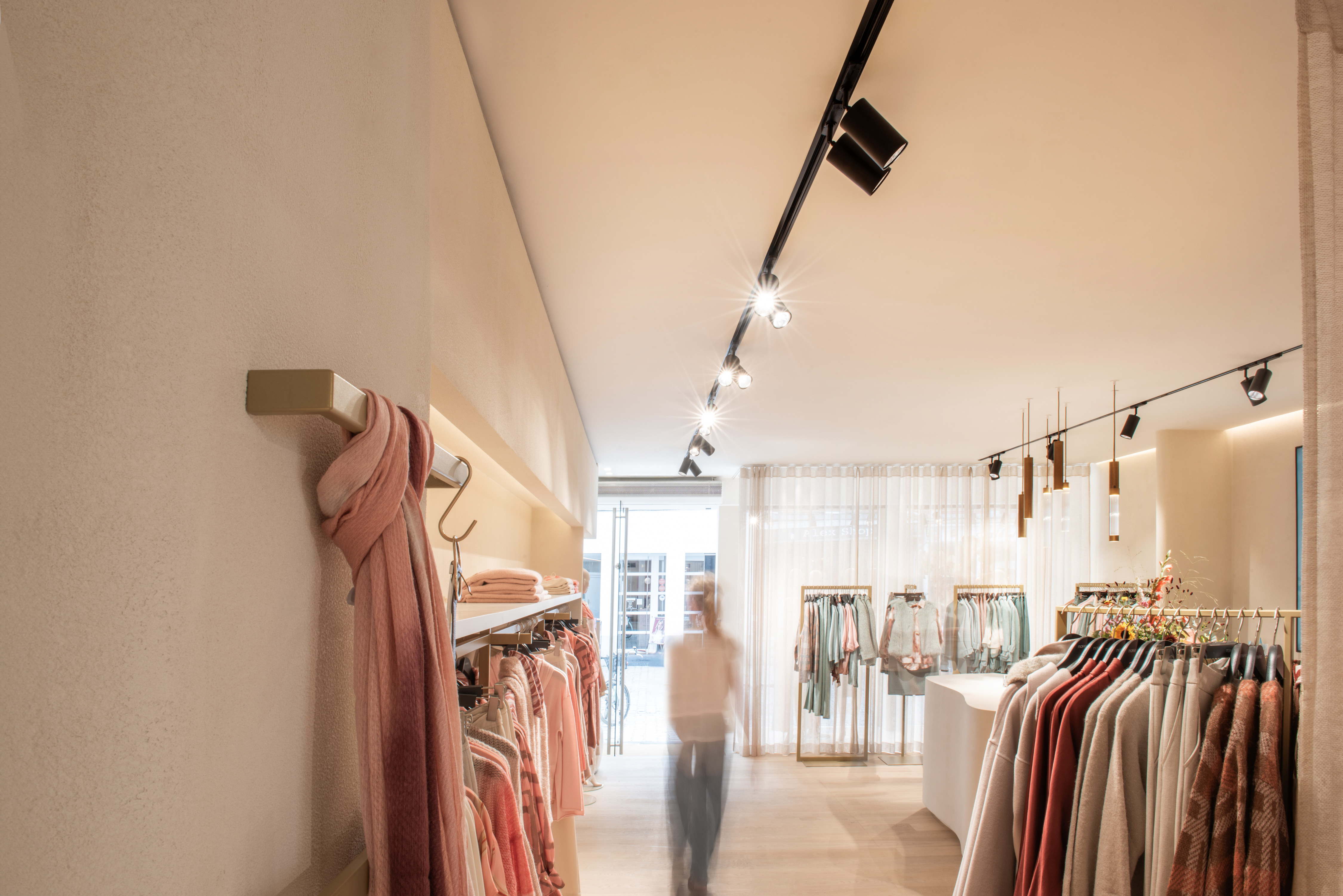
In a clothing store, fabrics and colors need to be displayed accurately. A navy-blue garment should not appear black under artificial lighting. Food retailers also rely on lighting with a high CRI to make products look fresher, more vibrant, and more appealing.
In restaurants, high-quality lighting further enhances the overall atmosphere and customer experience.
CRI vs. color temperature: What’s the difference?
CRI is often confused with color temperature, but the two serve different purposes.
Color Temperature (Kelvin) determines whether light appears warm or cool:
2700K = warm white
3000K = neutral warm white
4000K = cool white
CRI indicates how accurately colors are rendered under a particular light source.
As a result, two lamps can have exactly the same color temperature (Kelvin value) while creating a completely different visual experience due to differences in their CRI.
Why high-quality LED lighting matters
Today’s LED lighting offers excellent energy efficiency, but not all LEDs provide the same quality of light. Lower-quality LEDs often have:
a lower CRI value
less consistent color temperatures
a harsher lighting experience
limited dimming capabilities
In contrast, a high-quality luminaire combines:
excellent color rendering
stable color temperature
comfortable light distribution
smooth dimming performance
a long lifespan
High-quality lighting makes all the difference
A well-designed lighting plan takes into account factors such as light output, color temperature, and CRI. This ensures that the lighting complements both the materials and the architecture of a space.
Ultimately, the quality of light determines how a room is experienced. A high CRI provides more natural colors, greater depth, and a more pleasant atmosphere, allowing every interior to look its best.
Looking for the ideal lighting solution for your project? Visit our showroom or contact us for professional lighting advice tailored to your needs.